Problem
People want to live sustainably, but cost, effort, low trust and impact they can't see stop them from acting on it. This is the value-action gap.
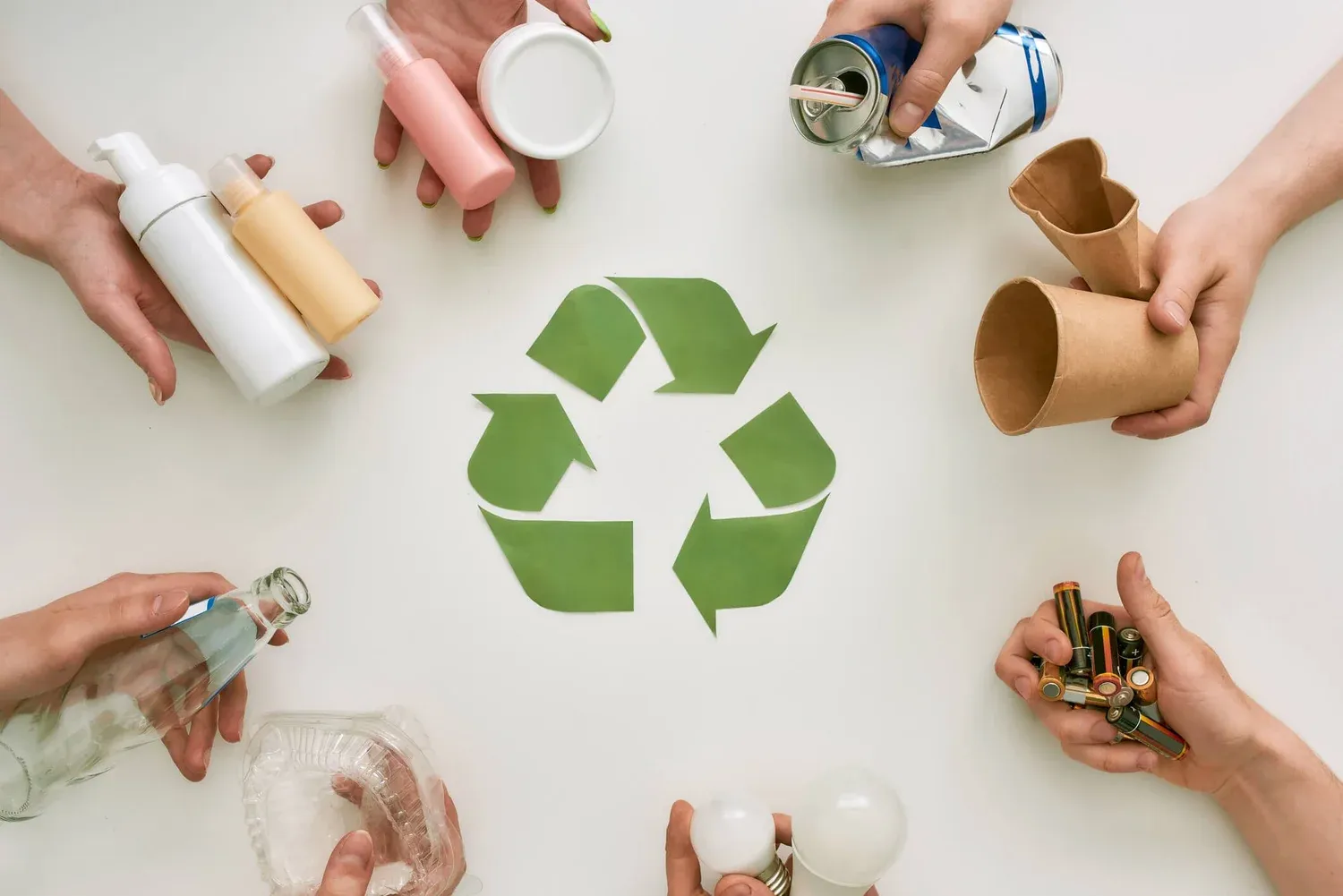
Most people say they care about the planet. Far fewer recycle or repair things regularly. ReLoop closes that gap with rewards people can feel right away, and options that take almost no effort.
People want to live sustainably, but cost, effort, low trust and impact they can't see stop them from acting on it. This is the value-action gap.
Many people care about the environment, but their daily habits rarely show it. Eco-friendly options cost more, are hard to find, and the impact is invisible, so the effort never feels worth it.
I didn't want to add another app that guilt-trips people. I wanted to make the sustainable choice the easier and more rewarding one.
…get everyday people to recycle and repair through meaningful rewards and convenience, without pressure?

Classes, a part-time job and a tight budget. He throws away recyclables because he doesn't have time to sort them or find out where they go.
Frustrations: doesn't know where to recycle some items. Finds sustainability apps slow or preachy. Has no space to compost.

She works full-time and wants to set a good example for her kids, but sustainable habits don't fit into her week.
Frustrations: no time to research recycling rules or drive to drop-off centers. Most apps feel like extra work.
The main insight was that distance is the biggest barrier. So I designed a service, not just screens, with options that range from "I'll go there" to "it comes to me."
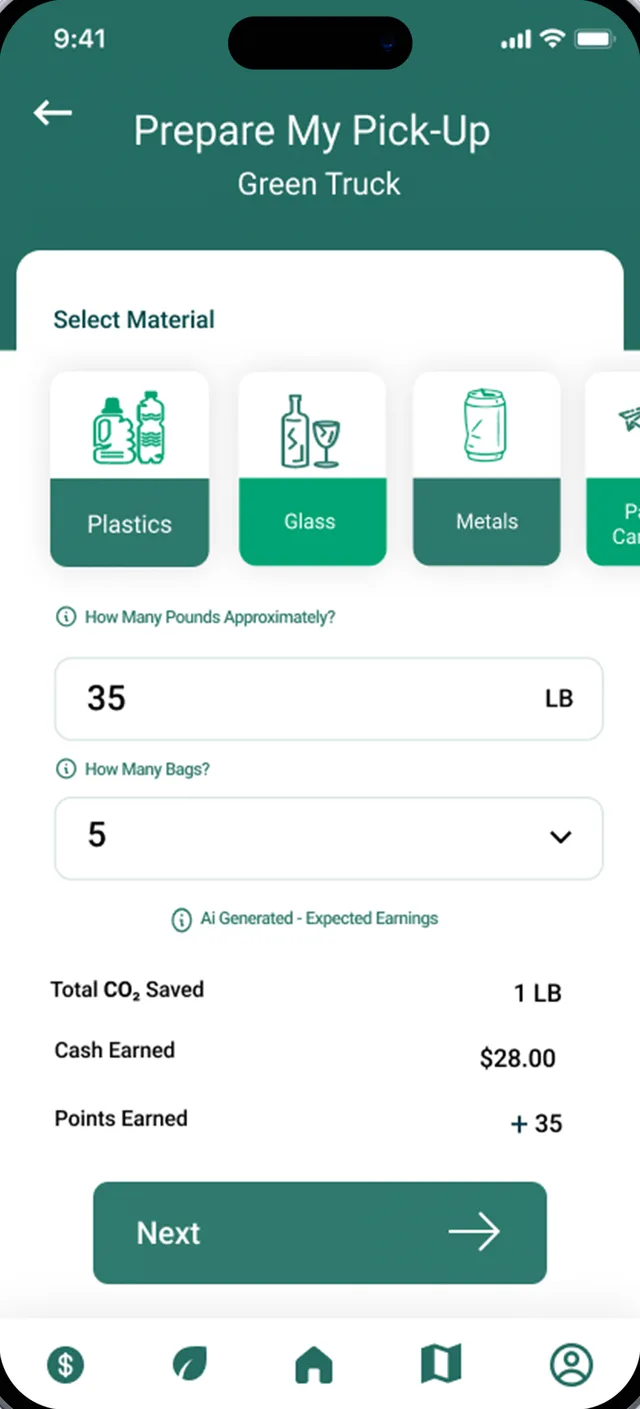
A real pickup truck comes to your address. Scan its QR code at handover and earn points based on what you return.
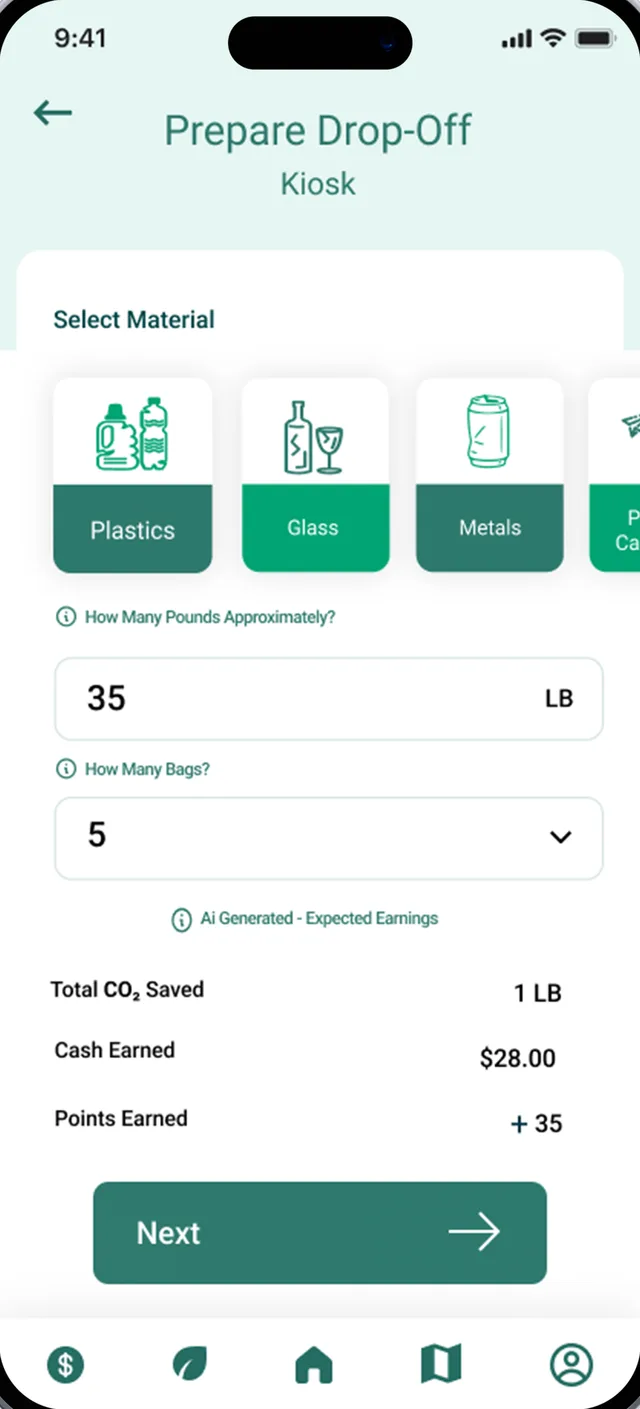
Plan a drop-off: choose materials and amounts, see the CO₂ saved and expected earnings, then book a time slot.
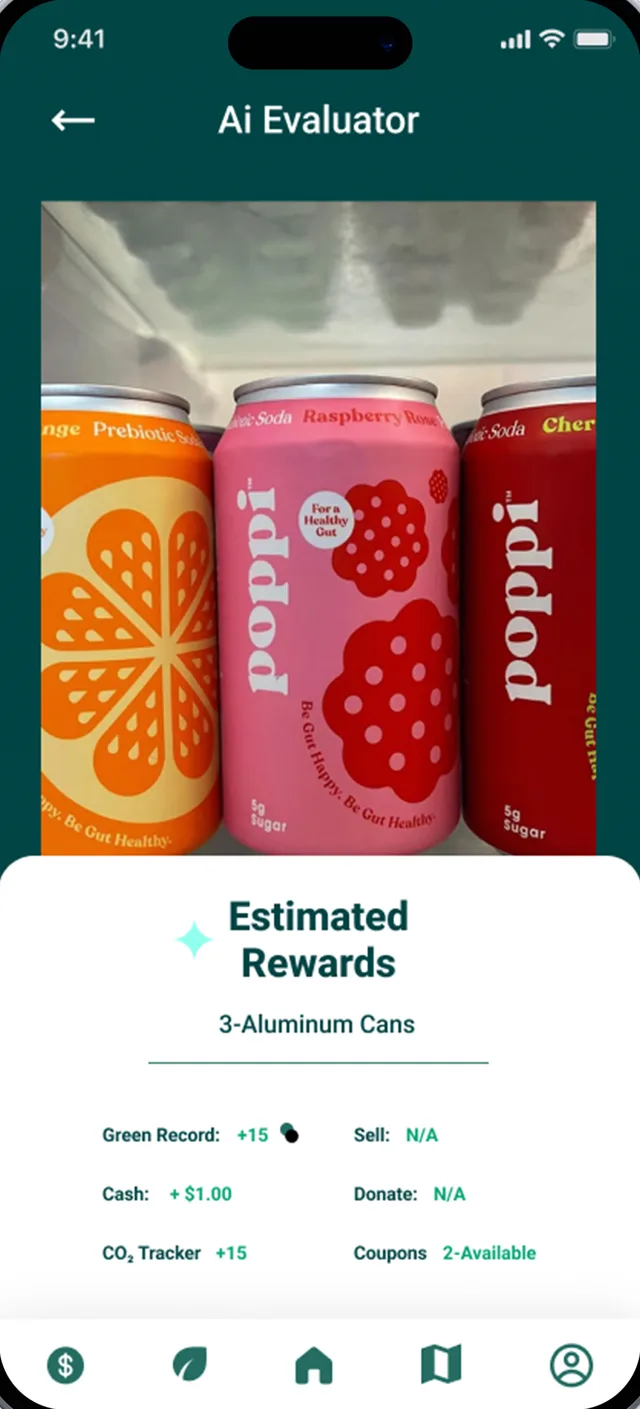
Take a photo of your items. ReLoop estimates the points, cash and CO₂ impact in seconds, before you go anywhere.
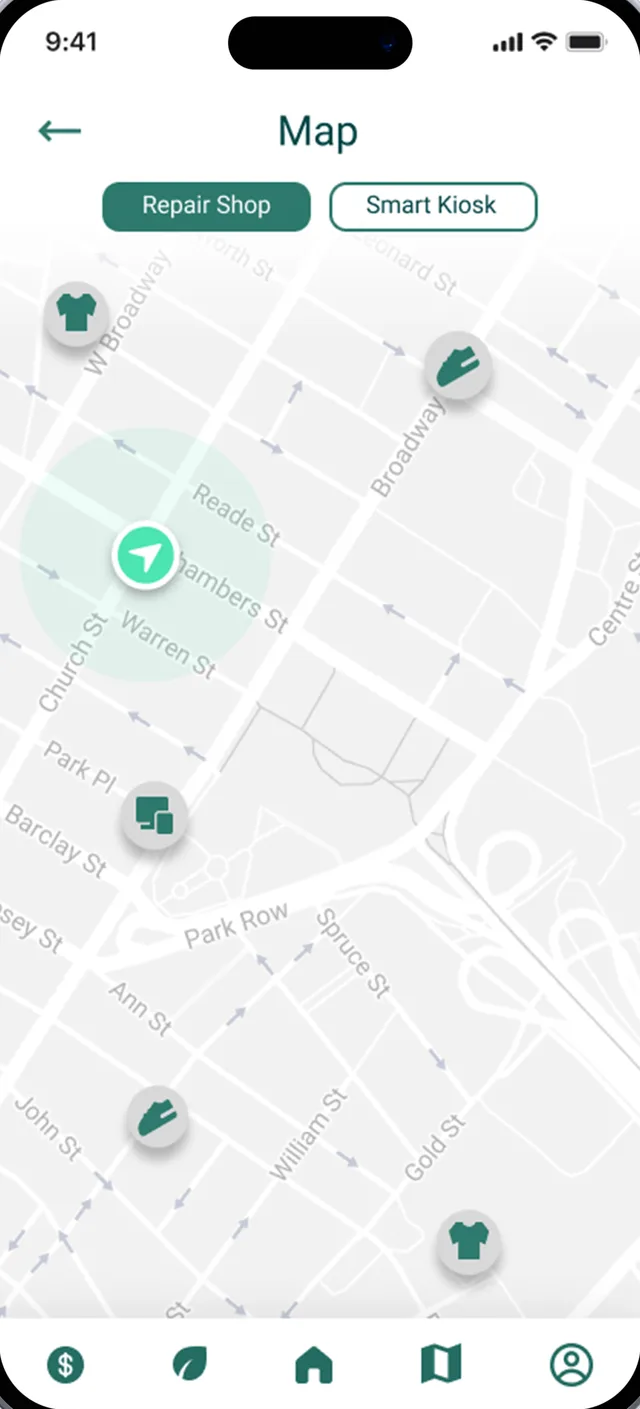
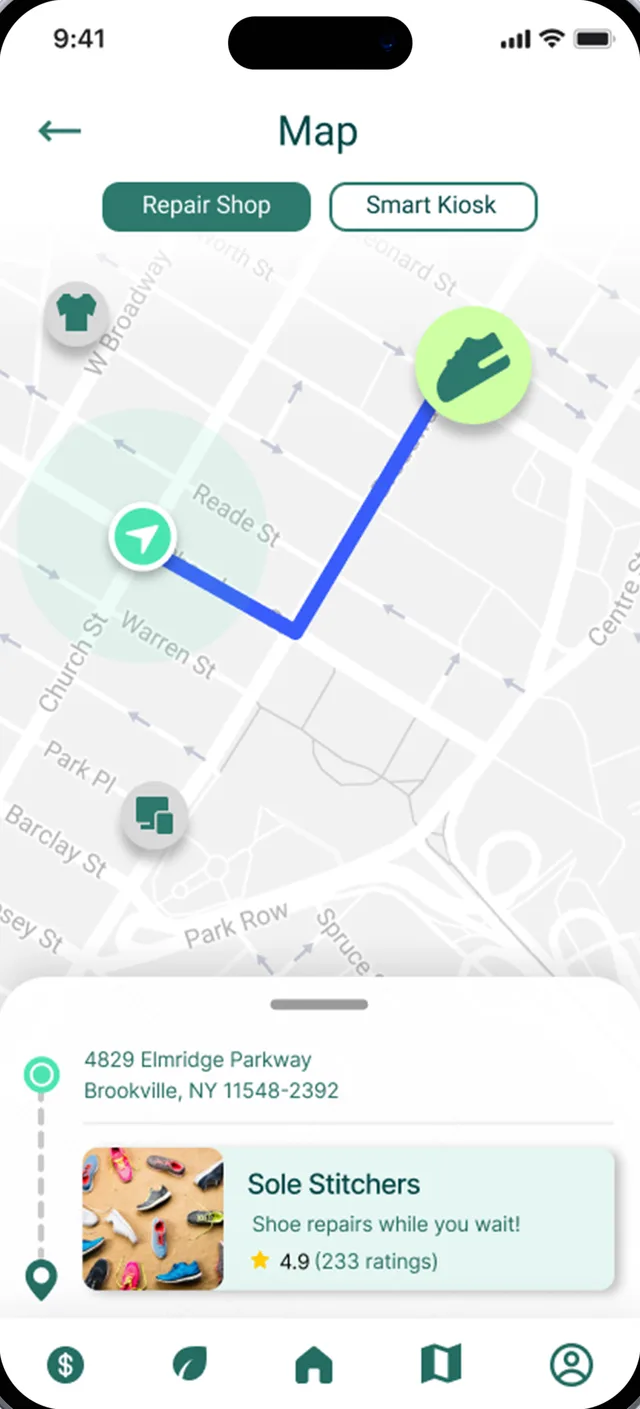
Repairing is greener than recycling. A map switches between repair shops and kiosks and gives directions.
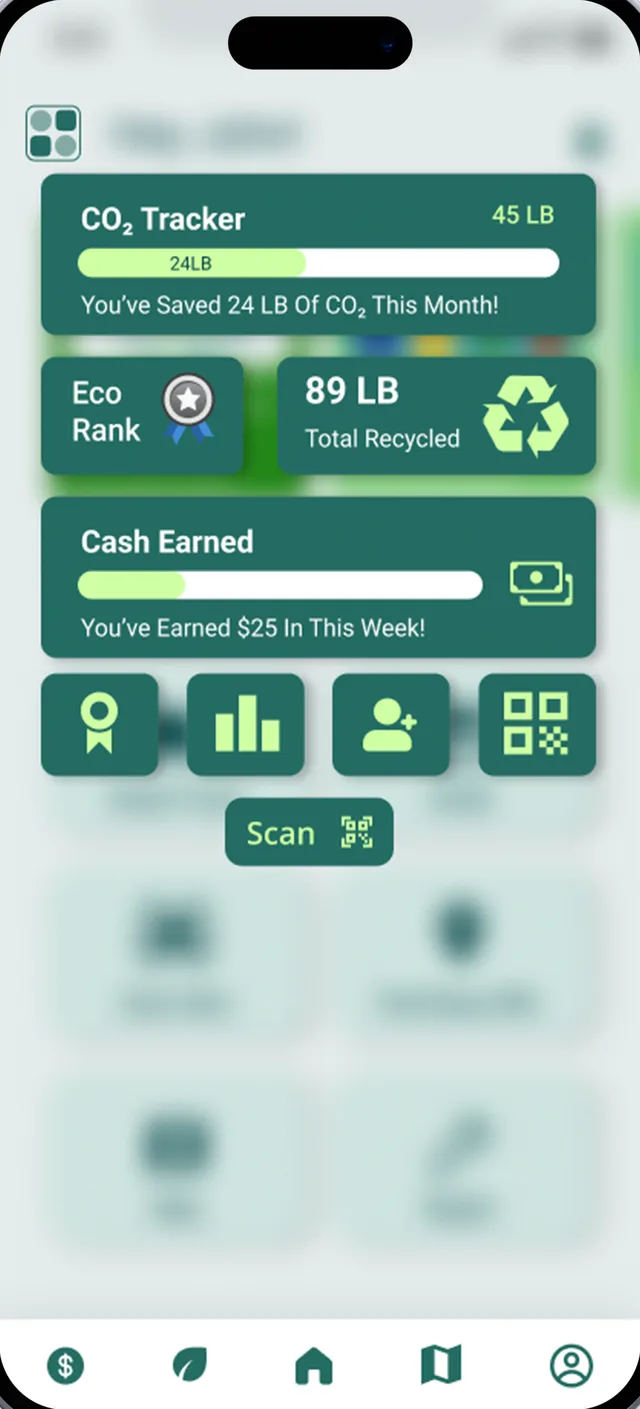
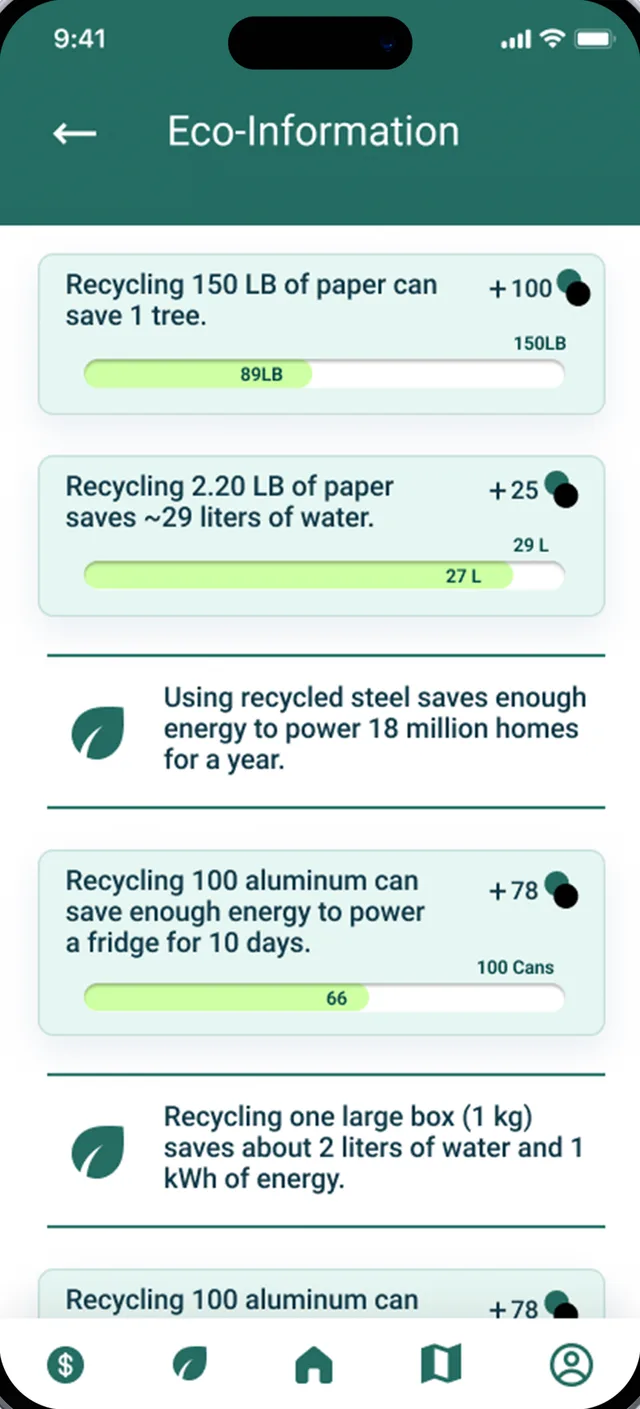
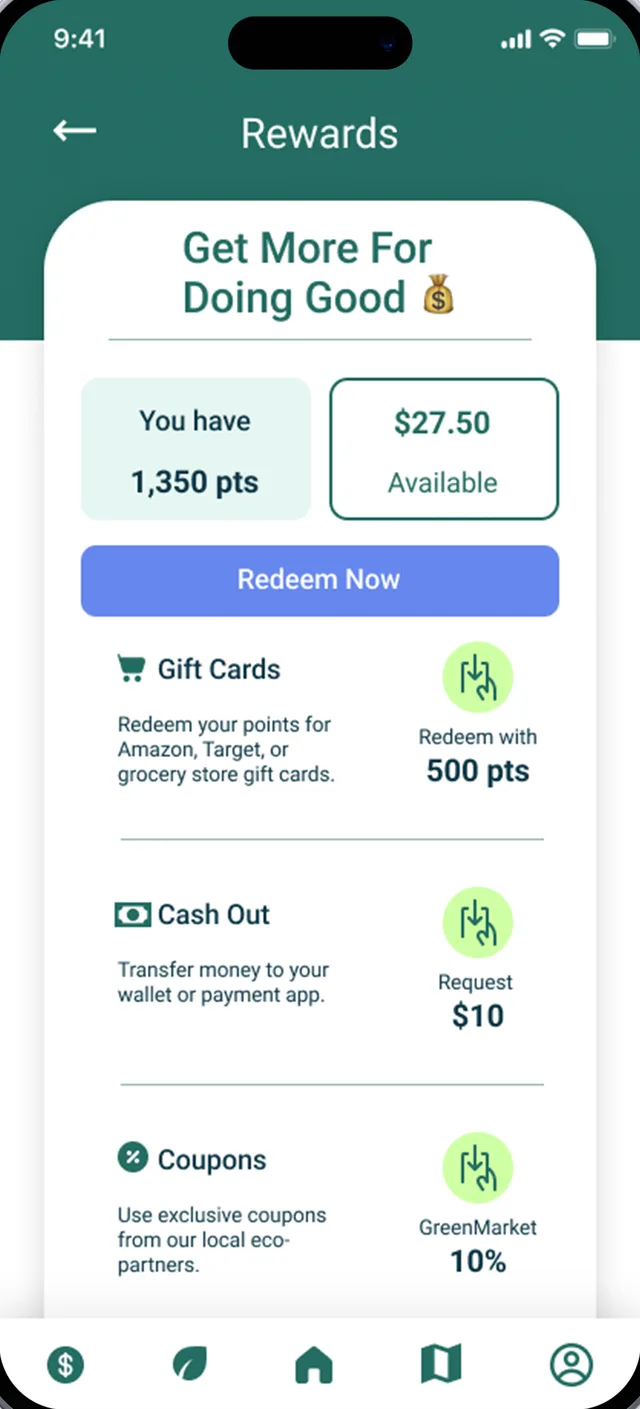
Points convert to gift cards, cash-outs or local coupons. A CO₂ tracker and eco-rank make the environmental impact concrete. A leaderboard and "Refer & Earn" make it social.
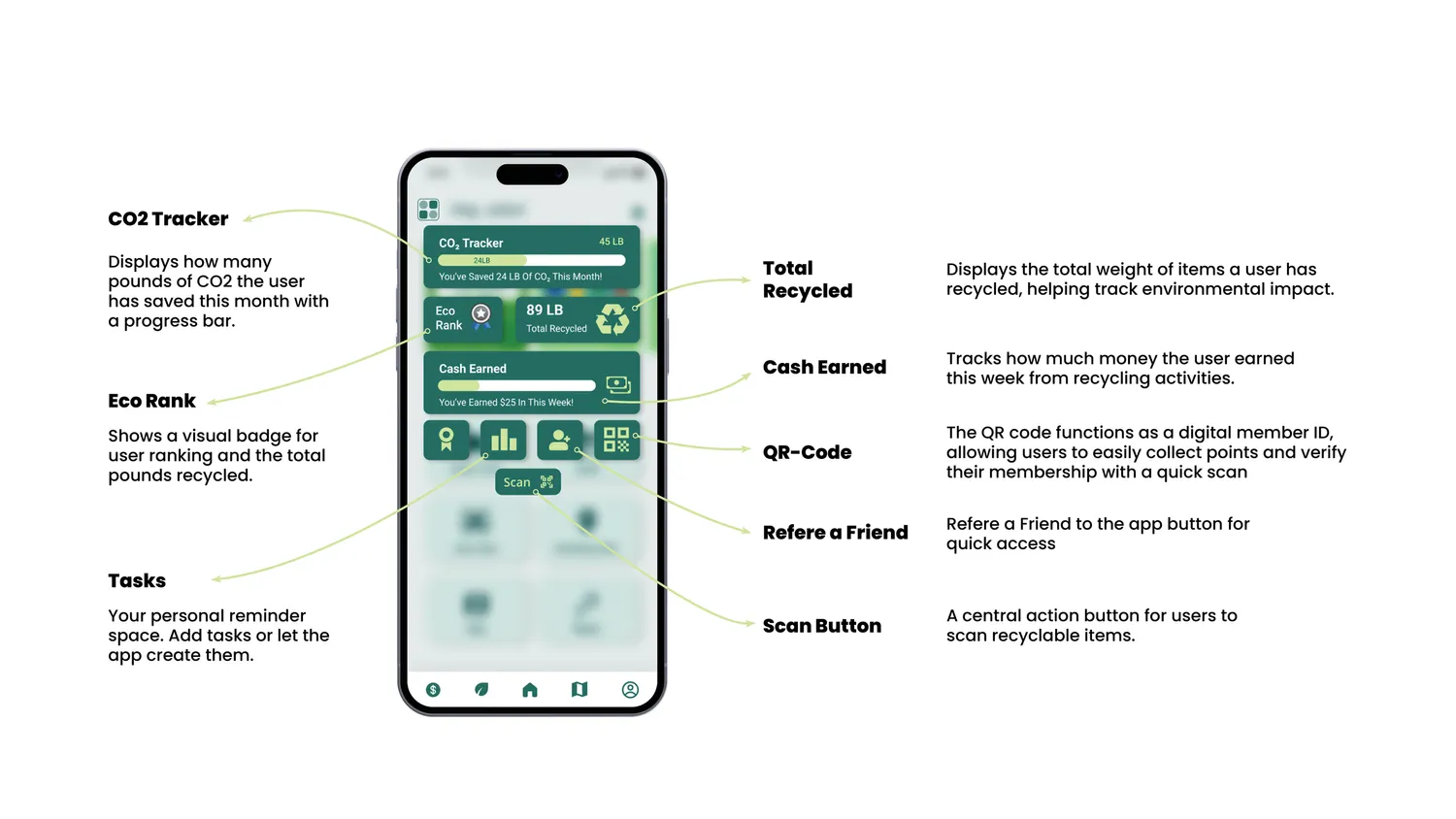
This is the idea behind the AI Evaluator: point your camera at something and see what it is worth before you go anywhere. Tap the items.
 01 · Onboarding
A splash screen, then phone number, a one-time code, personal details and a 4-digit PIN. Cash is involved, so security has to be visible, but it can't slow people down.
02 · Home
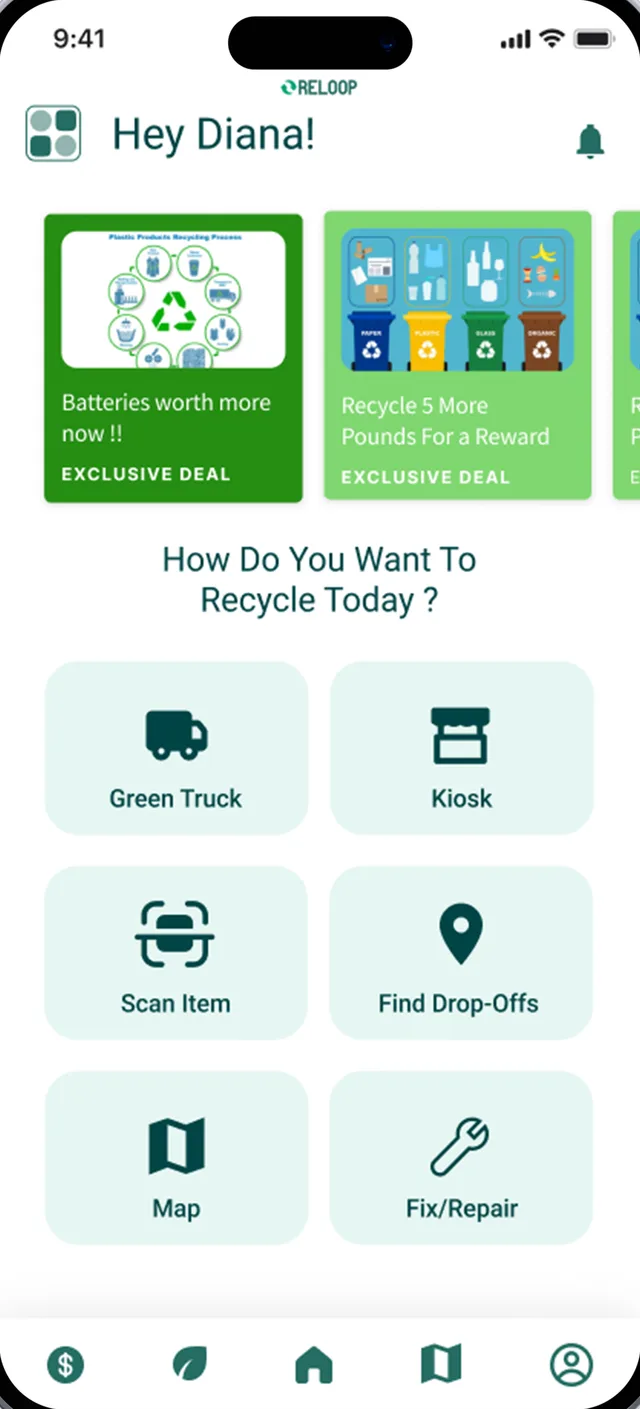
Large icon shortcuts for every channel (truck, kiosk, scan, drop-offs, map, repair) with deals at the top. The home screen is a menu of actions, not a feed.
03 · Map
Switch between repair shops and smart kiosks. Tap a pin to see the address, photos and ratings, then follow the built-in route.
04 · Smart Kiosk
Choose the material, weight and number of bags, and see the CO₂ saved and expected earnings. Then book a slot and get a confirmation.
05 · AI Evaluator
One photo, and the AI estimates the rewards, points and CO₂ impact. It answers the question "is this worth recycling?" in seconds.
06 · Green Truck
Schedule a pickup, prepare your items, and scan the truck's QR code when it arrives. This connects physical recycling to digital rewards.
07 · Rewards
Points and cash balance up front, redeemable as gift cards, cash or local coupons. A leaderboard and referrals add some friendly competition.
08 · Impact
Progress by material (paper, aluminum, steel) turns abstract good into something you can see grow.